When the newsletter shows a weak result, the first thing is usually to rewrite the message. Change the greeting, shorten the text, add more benefits, or try another question at the end. Sometimes it helps, but often the reason is not in the wording.
The message may be sent to the wrong audience. The sentence itself may be irrelevant or unclear. Users can respond but not proceed to the next step. Therefore, the working bundle is not just a good text, but a combination of the audience, the offer, the message, the moment of sending and further processing of answers.
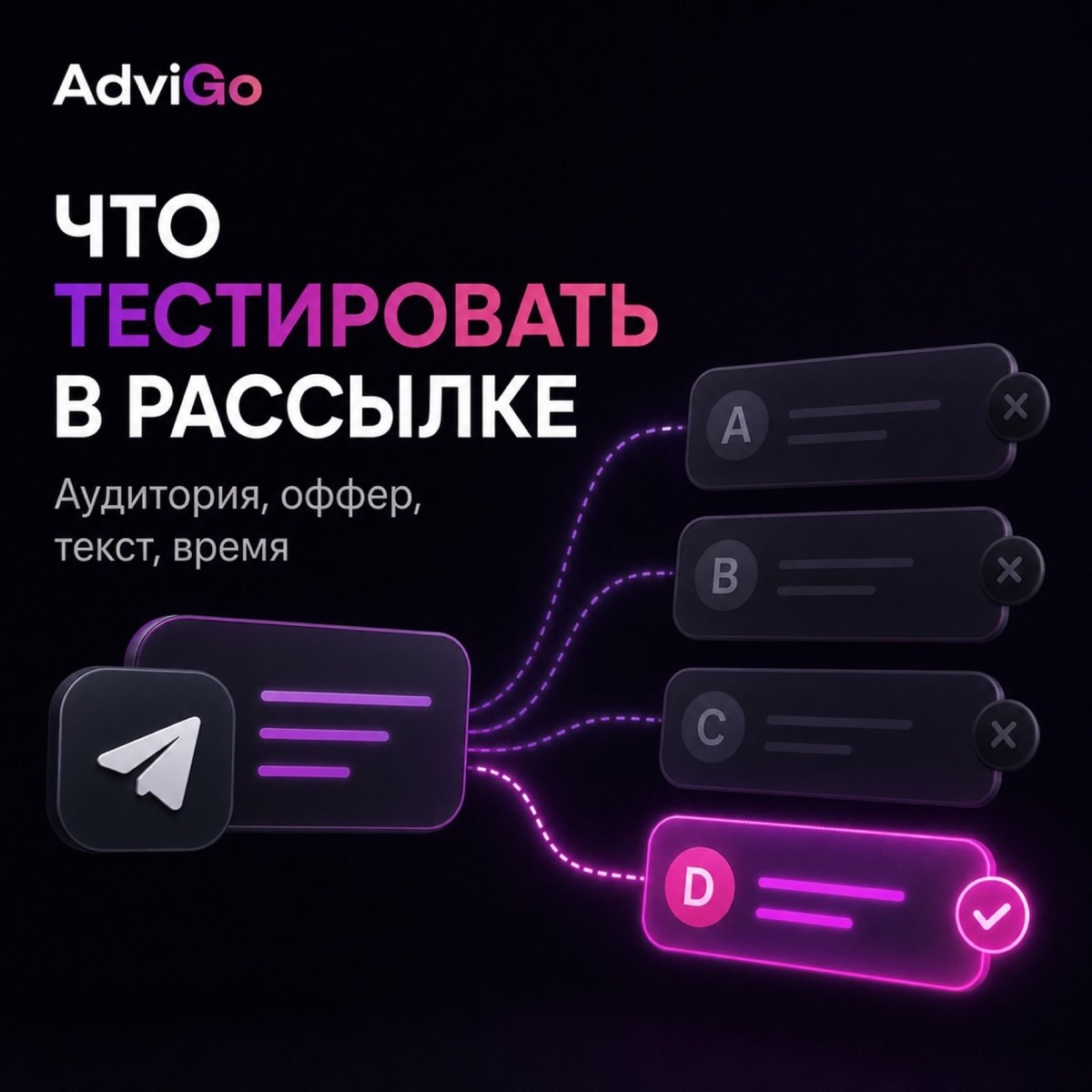
To find it faster, it is important to test the elements in turn and understand which indicator should change.
Check the audience first.
It is useless to improve the text for weeks if the sentence is sent to people without a suitable need. So the first question is not “what to write?” but “who are we sending this?”
For example, the same service is offered to participants of a wide entrepreneurial channel and users of profile chat. Even with the same message, the results can be very different: in the first case, part of the audience does not face such a task at all, and in the second, users are already in the right context.
For the first test, take a few small segments and send them the same offer. For example, compare the audience of a competitor, members of the profile community and a wider thematic base. So it becomes clear where there is interest, and where the text tries to compensate for the wrong choice of the audience.
After the audience, check the offer
If a segment responds to a message, but almost no one wants to continue the conversation, the problem may already be in the sentence.
Beginners often confuse text and offer. The text is how the message is formulated. Offer is what a person ends up getting and why they should take the next step.
For example, the phrases “tell us about our service” and “show us how to process responses from all Telegram accounts in one window” can lead to the same product, but promise the user different value. The second option is more specific and immediately connects the proposal with an understandable task.
At this stage, it is better not to change the entire newsletter. Leave the same segment and roughly the same message structure, but test different reasons to continue the dialogue: a free consultation, a product demo, calculating the result, or another next step.
Change only one element.
Imagine that in a new test you simultaneously took a different base, rewrote the offer, changed the sending time and connected a new manager. The result has doubled, but it is impossible to understand the cause.
Therefore, in each test, one basic variable must change. If the offer is checked, the audience and time remain the same. If two messages are compared, they are sent to comparable segments in the same period. If the time is checked, the text and base will not change.
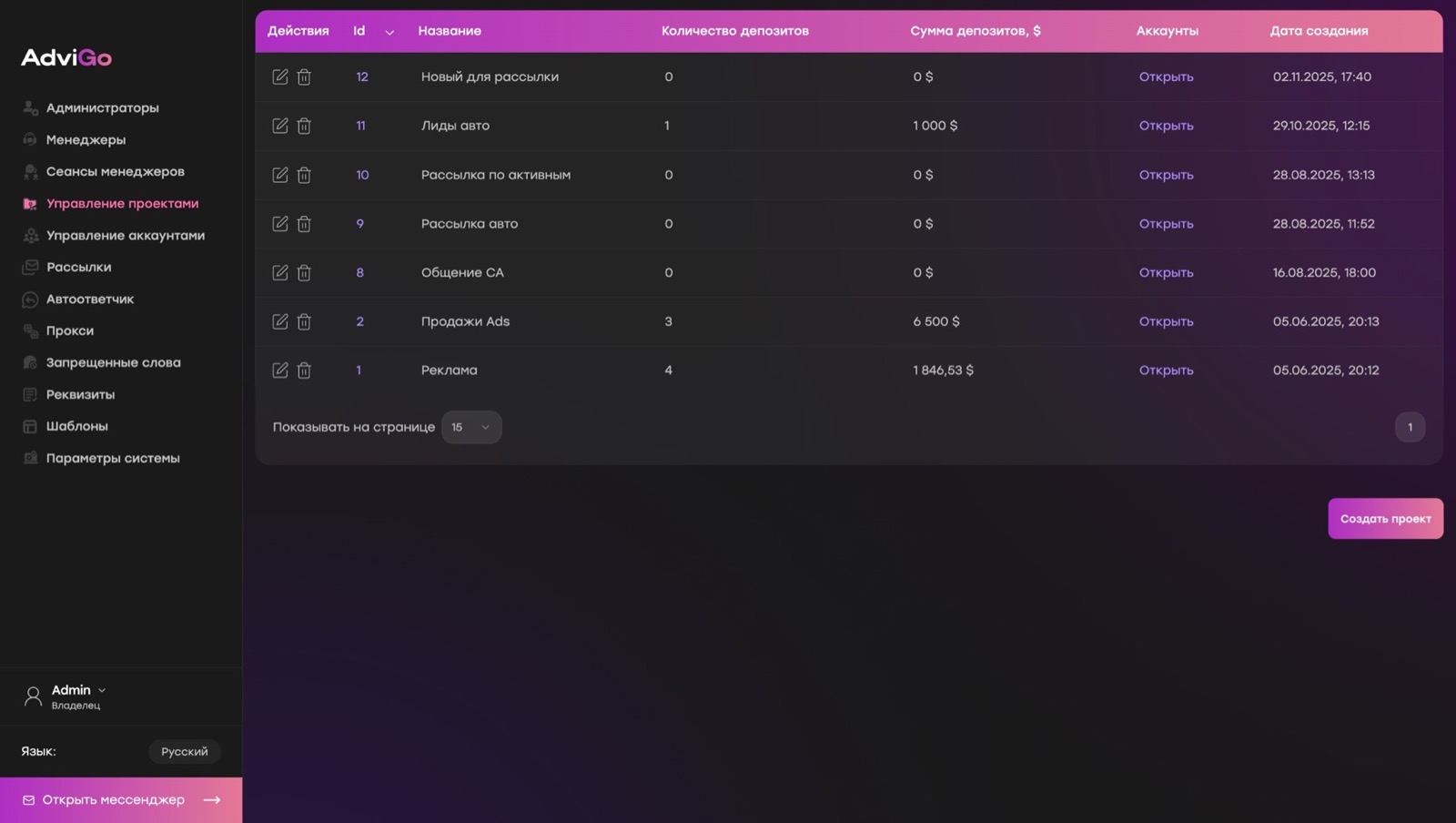
In AdviGo, it is convenient to create separate projects or campaigns with clear names for different tests. For example, “Profile chats – demonstration” and “Profile chats – consultation”. After starting the mailing, the answers are not mixed into one general hypothesis, and the team understands what offer a particular user received.
The general logic of working with projects is described in the AdviGo manual.
Select the main indicator before launch
The winner is not always the message that gets more answers.
One option can cause many reactions, but most will be rejections or random questions. The other will receive fewer responses, but more often lead to a consultation, registration or transaction.
Therefore, before launching, you need to decide what is considered a success. If the purpose of the mailing is to schedule a demonstration, the main result is the number of scheduled demonstrations. If applications are needed, applications are evaluated. The number of responses remains a useful intermediate indicator, but not the final goal.
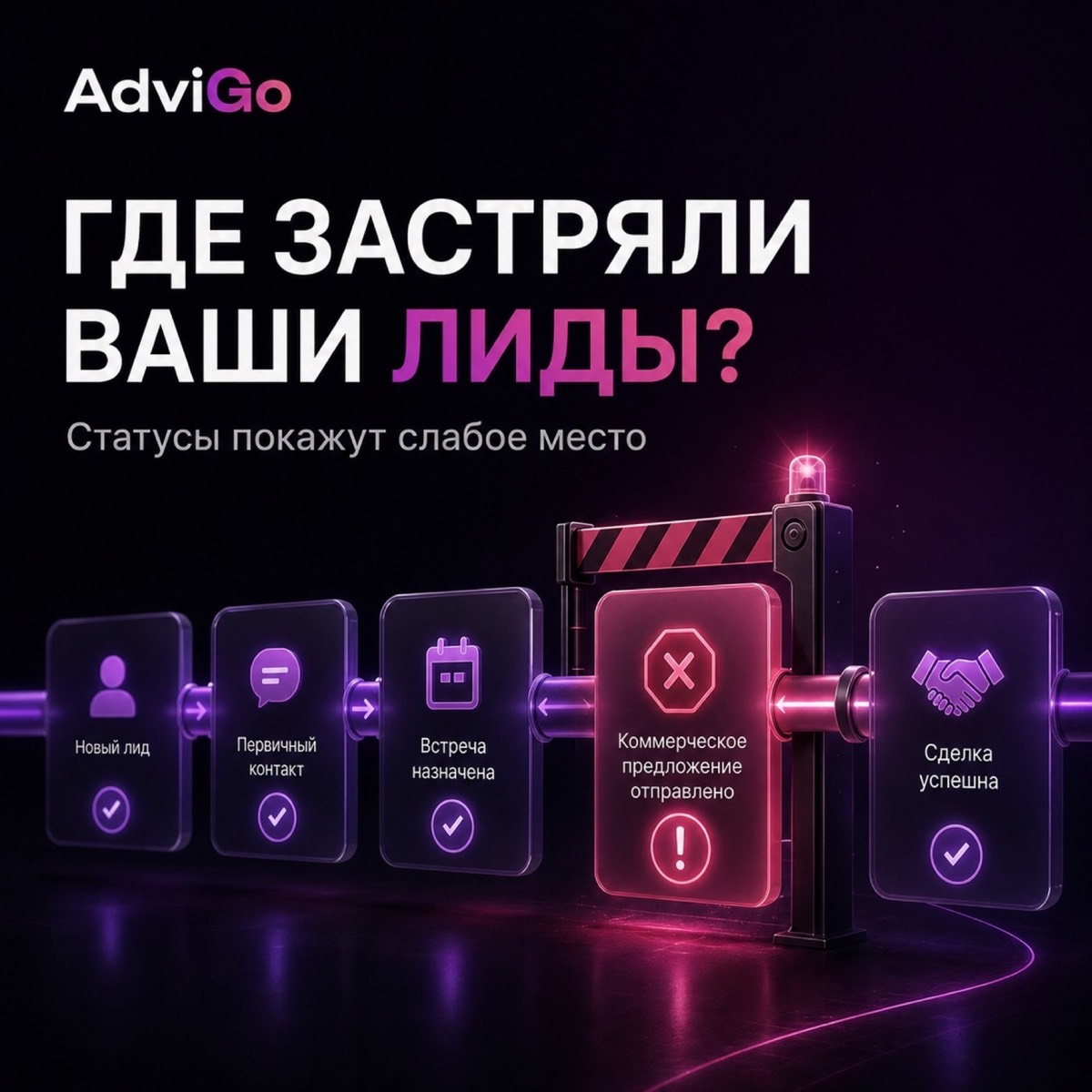
Для фиксации движения пользователя в Advigo можно использовать статусы. Они помогают отделить обычный ответ от целевого интереса, квалифицированного лида, следующего шага и сделки. Подробнее эта механика разобрана in the "Basic Information" section of the manual
Do not conclude after the first answers
The first few reactions can greatly distort the impression. For example, one option received three positive responses in a row, and the second received two rejections. This does not mean that the first option is objectively better.
For comparison, you need comparable volumes and enough time for the team to process the answers. There is no universal number of contacts for any business: the result depends on the size of the audience and the usual conversion of the project.
It is easier for a beginner to set the same volume for each version in advance. For example, send two variants of 500 users from comparable segments, wait for response processing, and then compare the passage through the funnel.
If one option from the first stages consistently creates only negative reactions or misleads people, the test can be stopped earlier. But to stop it just because the first five messages did not give a lead is also not worth it.
Look not only at the numbers, but also at the dialogue.
Statistics show which option gave more targeted actions. But the correspondence itself explains why this happened.
Users may ask the same question, misunderstand a sentence, or pause before the next step. Sometimes it becomes clear from the dialogues that the problem is not in the text, but, for example, in the price, conditions or too complex action after the answer.
In AdviGo, answers from connected Telegram accounts are collected in one interface. Managers can continue the conversation, change user status, and keep important context in internal comments. This helps to supplement the numbers with real team observations.
Test results can be compared through the Statistics section. A bundle of statistics, statuses and dialogues reveals not only the winning option, but also the reasons for the difference.
Every test must end with a decision.
Testing should not become an endless rewriting of messages. After each launch, one clear decision must be made.
If the profile segment is stronger than the broad base, the next test is conducted inside this segment. If one offer gave more qualified leads, then we can compare the two formulations of this offer. If both texts work the same way, it makes sense to check the sending time or next step.
The work cycle is simple: run two comparable versions, look at the statistics, study the dialogues, select the winning hypothesis and change one next element.
AdviGo helps to keep this process manageable: divide tests by project, conduct mailings, collect responses in one interface, mark user movement through statuses and compare the result in statistics.
So the working connection is not accidental. It is gradually assembled from proven elements: a suitable audience, an understandable offer, the right message and the next step that really leads the user to the sale.