As long as the company operates through two or three Telegram accounts, manual management seems normal. Managers switch between apps, check notifications, and roughly remember where the dialog is.
The problem comes with growth. Accounts become 20, 50 or 100, new managers are connected to work, and mailings are launched for several projects at once. Employees spend more and more time not communicating with customers, but finding the right session, checking incoming messages and finding out who is responsible for a particular user.
At this point, the company does not need another Telegram application, but a unified system for managing accounts and dialogues.
When the manual work ceases to cope
Imagine a manager who works with ten Telegram accounts. In order not to miss the answer, he needs to regularly open each session and check incoming messages. If there is a parallel mailing, new dialogs appear on different accounts and quickly mix with already started correspondence.
One message can be spotted and delayed and then lost among new notifications. Two employees will respond to another user at the same time. After the transfer of the dialogue, the colleague will not understand what has already been agreed with the client.
Individually, such cases look like small mistakes. With hundreds of accounts, they become a constant loss of time and leads.
Collect accounts in one interface
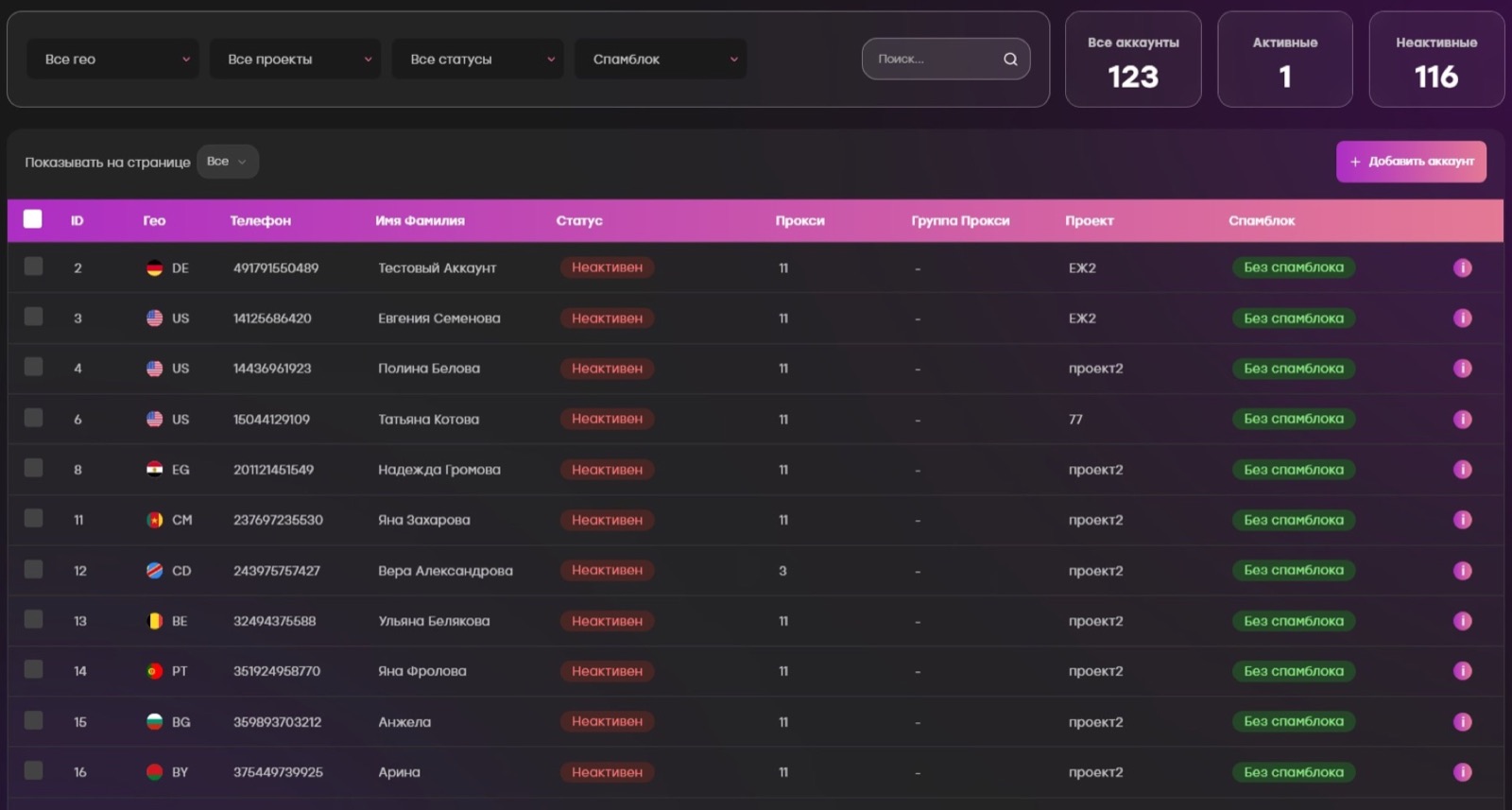
In AdviGo, you can connect a large number of Telegram accounts and manage them from one workspace. The manager does not need to manually log into each session and constantly switch between applications.
Accounts can be allocated to projects, and employees can only access the areas they work with. As a result, the manager sees his workspace, and the administrator retains control over the entire infrastructure.
You can read more about connecting, setting up and working with accountsIn AdviGo’s “Account Management” section.
Separate accounts by appointment
A single interface does not solve the problem by itself if all connections are collected in one unnamed list. The more accounts there are, the more important the structure is.
Some accounts may relate to a specific product, others to an individual customer, language, region, or campaign type. Some connections are used constantly, and some remain in reserve.
The name of the account should help the employee immediately understand his appointment. A clear designation of a project or direction is more useful than the conventional “Account 47”, the meaning of which must be searched for in a separate table.
This is especially important for beginners. The new manager is quicker to get involved and less likely to open the wrong account or respond to the user on behalf of another project.
Do not hand over Telegram sessions to employees
When working manually, managers are often given account details, an active session, or a device with an open Telegram. As long as the team is small, this scheme seems convenient. But with growth, it becomes difficult to control who has access and whether it is used outside the company.
At AdviGo, the manager works with the projects and dialogues available to him within the system. It does not require full access to the Telegram account.
This separates customer service from infrastructure management. If an employee moves to another project or leaves the team, the administrator can change their access within the system without looking for work sessions on different devices.
Secure accounts and employees behind projects
When a company has dozens of accounts, it’s not enough to know they’re connected. It is necessary to understand what direction each of them belongs to and who processes the incoming dialogues.
In AdviGo, a project can correspond to an individual product, customer, region or campaign. It connects the necessary accounts and employees. Several managers can simultaneously work with the general flow of appeals without transferring Telegram sessions to each other.
For the manager, this makes the structure more transparent. Instead of asking “who owns this account?” there is a clear distribution of projects, connections and accesses.
Collect answers in a general queue
The main value of centralized work is manifested after the launch of the newsletter. If messages are sent from a few dozen accounts, responses also come in different sessions. In a manual scheme, managers have to check each of them separately.
In AdviGo, dialogs from connected accounts are collected in one interface. The manager works with a common queue of requests and does not waste time on a constant switch between Telegram applications.
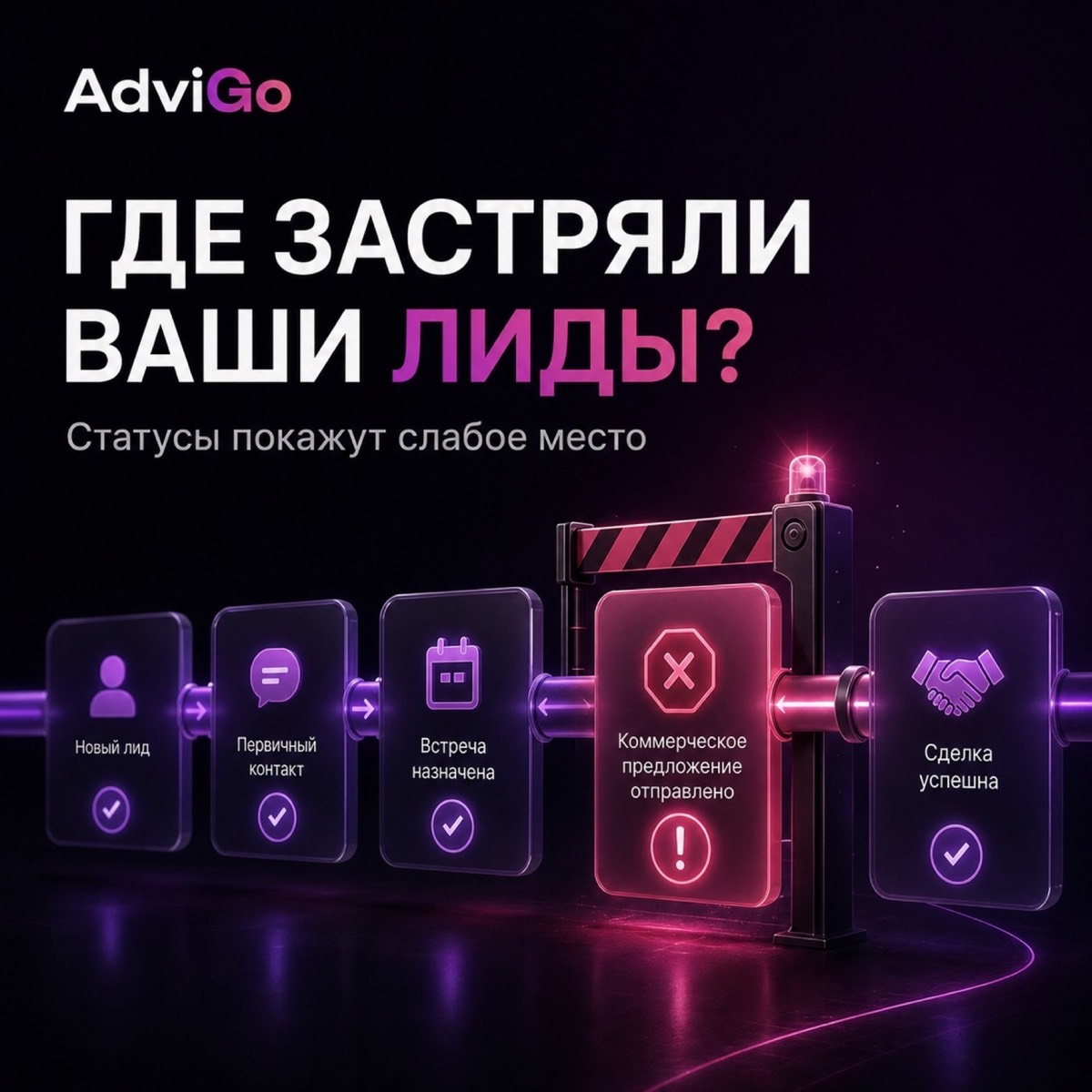
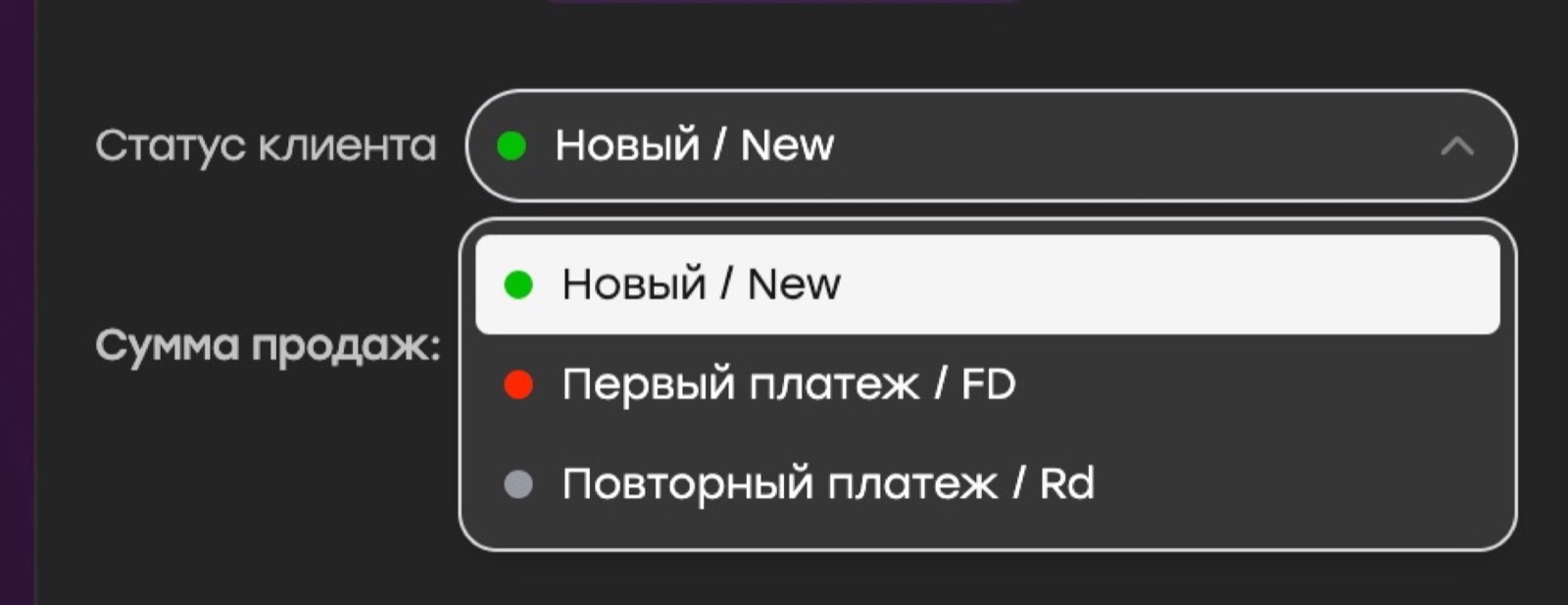
Further, users can be distributed by funnel stages using statuses. For example, separate a new response from a targeted interest, qualified lead, assigned next step or trade.
For more information on setting up this logic, see the Sales and User Status section of the guide.
Keep the context within the dialogue
With a large team, one manager can start a conversation and the other can continue it later. The client does not have to explain his task again.
Internal comments in AdviGo help capture information that employees need, but should not be sent to the user. For example, you can specify that the client is waiting for the calculation, asked to write at a certain time or has already discussed specific conditions.
So the context stays close to the correspondence, and not lost in private messages of managers, work chats and spreadsheets.
Estimate useful power, not the number of connections
One hundred added accounts does not mean that all hundred are constantly working and bringing results. Part may be in reserve, and some connections may be temporarily unused.
In addition, additional accounts will not help if managers do not have time to process answers. In this case, infrastructure growth will create more raw dialogue, but not more sales.
Поэтому важно сопоставлять количество активных аккаунтов с объёмом базы, количеством ответов и возможностями команды. To analyze the results, AdviGo provides a section “Statistics”.
Statistics help to understand whether the project really needs new accounts or the restriction is elsewhere: as an audience, a newsletter message, or the speed of dialog processing.
One hundred accounts should not mean one hundred windows.
Centralization is not about showing all accounts on one screen. Its task is to remove the dependence of the workflow on constant switching, employee memory and manual tables.
In AdviGo, accounts are distributed by project, employees get the necessary access, and responses are collected in a common interface. Context is stored within dialogs, user movement is recorded through statuses, and the result can be evaluated using statistics.
Then the growth from ten Telegram accounts to a hundred increases the working capacity of the company, not the number of windows that managers have to check manually.