An outreach campaign can look successful within hours: users reply, ask questions and start conversations. A few days later, however, there may be almost no qualified leads and only a handful of people reaching the next commercial step.
It is easy to blame the text and try to make the message more attention-grabbing, or add accounts simply to collect more replies. Yet a reply alone says little about campaign quality.
The user may have replied out of curiosity, declined, asked an unrelated question or misunderstood the offer. Judge the campaign by what happens after the first reply, rather than by the number of reactions.
A reply is not the same as relevant interest
Consider two outreach campaigns.
The first receives 100 replies, but most say “not interested” or “what exactly are you offering?”. The second receives 50 replies, but 15 people ask for details and several agree to the next step.
Looking only at reply rate, the first campaign appears stronger. The second is more valuable to the business.
The team should therefore agree in advance on what counts as a relevant reaction: a question about terms, a request to see the product, interest in pricing or willingness to continue the conversation.
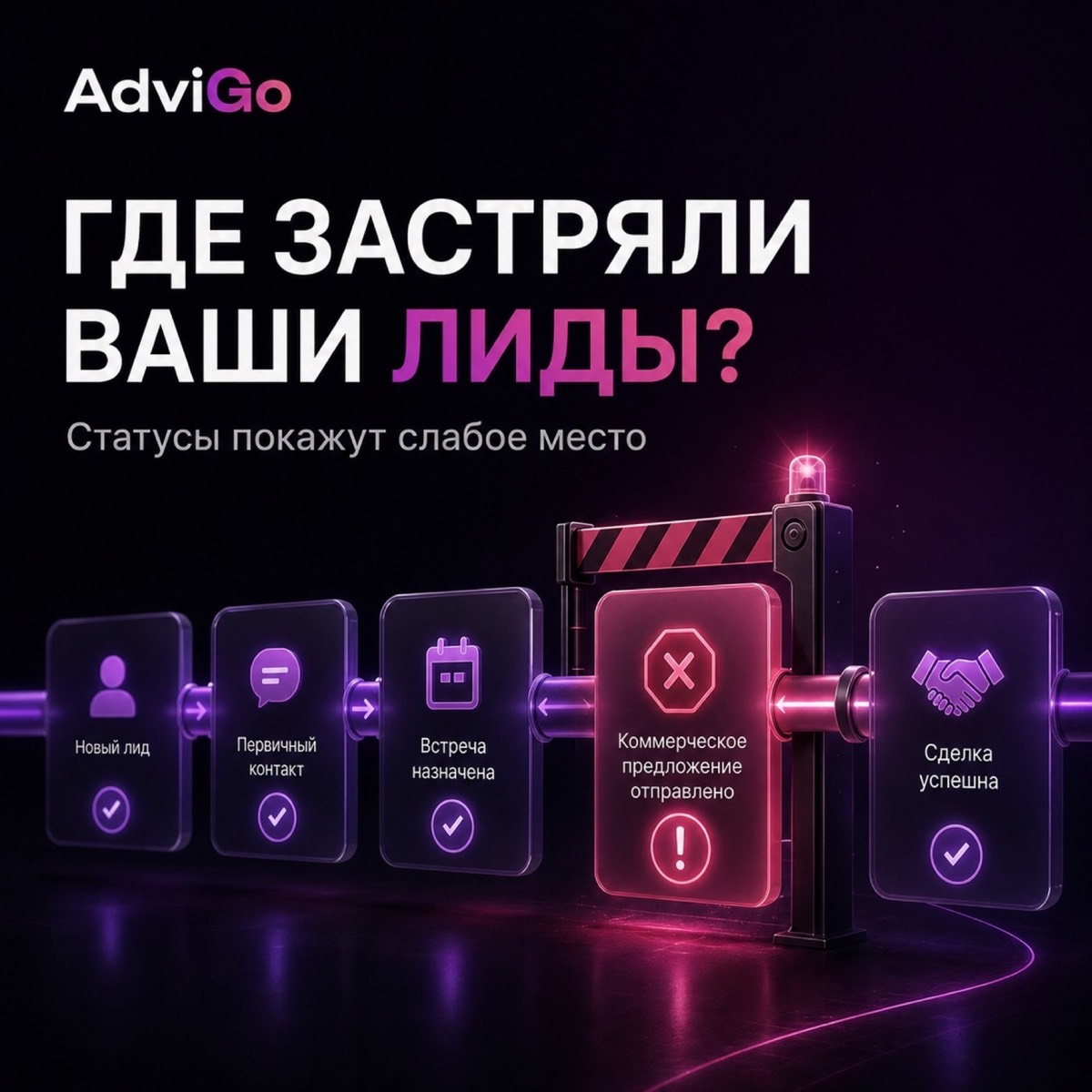
AdviGo user statuses make it easy to record these transitions. Representatives then classify conversation outcomes consistently, and the overall reply rate no longer mixes interested users with ordinary reactions.
Check whether the follow-through matches the promise
Sometimes the opening message works well, but the user loses interest immediately after replying.
The first contact may promise a simple next step, only for the user to receive a long presentation, many questions or a request to make a deposit immediately.
For example, the user replies, “Yes, I am interested.” Instead of checking their readiness or briefly showing the solution, the representative sends several screens of text and terms.
The person has already shown interest, but continuing the conversation has become too demanding.
You do not need to rewrite the opening message in this situation. Review what follows the reply: how quickly the user understands the next step and how much effort it requires.
Often, one clarifying question and a short example are enough before offering a demo or consultation.
Check what happens inside the sales team
Even strong outreach can lose most of its value after the first reply.
A user responds within a minute, but the representative joins hours later. One employee opens a conversation and forgets to return. Another misses the outreach context and explains the product from scratch. Sometimes two representatives answer one person while another conversation receives no follow-up at all.
Marketing has done its job: the person replied. The sale was lost during handling.
AdviGo gathers incoming conversations from connected Telegram accounts into one workspace. Representatives do not need to keep switching sessions, and the team can work with a shared stream of enquiries.
When response is strong but leads are scarce, the manager should ask: what exactly happens to the user after the reply, and how quickly?
Read the conversations you lost
Numbers show where the funnel drops. Conversations explain why.
If users keep asking the same question after the opening message, the offer may be too vague. If discussions stop as soon as price is mentioned, check whether enough value was explained beforehand.
If people agree to continue but the exchange stalls a few messages later, the representative may not have proposed a clear next action.
Regularly compare successful and lost conversations within the same segment. You do not need to read hundreds: a few examples often reveal a recurring pattern faster than another copy A/B test.
AdviGo keeps these conversations in one workspace, making it easier for managers to compare the exchange with the user's status and the project's overall outcome.
Do not try to repair the funnel with extra accounts
Additional Telegram accounts increase potential outreach volume. They do not fix a weak offer, poor qualification or slow sales handling.
Suppose only two of every 100 replies become qualified leads. Increasing outreach fivefold at the same conversion rate will give the team around 500 conversations to process for roughly ten leads, rather than simply “more sales”.
Workload will grow faster than results.
Scale an approach that has already been validated: you know which audience shows relevant interest, representatives keep up with replies, and users consistently progress through the funnel.
Only then do extra accounts increase productive capacity instead of amplifying the existing problem.
Measure lead progress, not just replies
A high reply rate is a good signal, but it is only the beginning.
If outreach gets replies but no sales, do not immediately rewrite the message or increase sending volume. First understand how many reactions show real interest, how quickly representatives engage and where users stop moving forward.
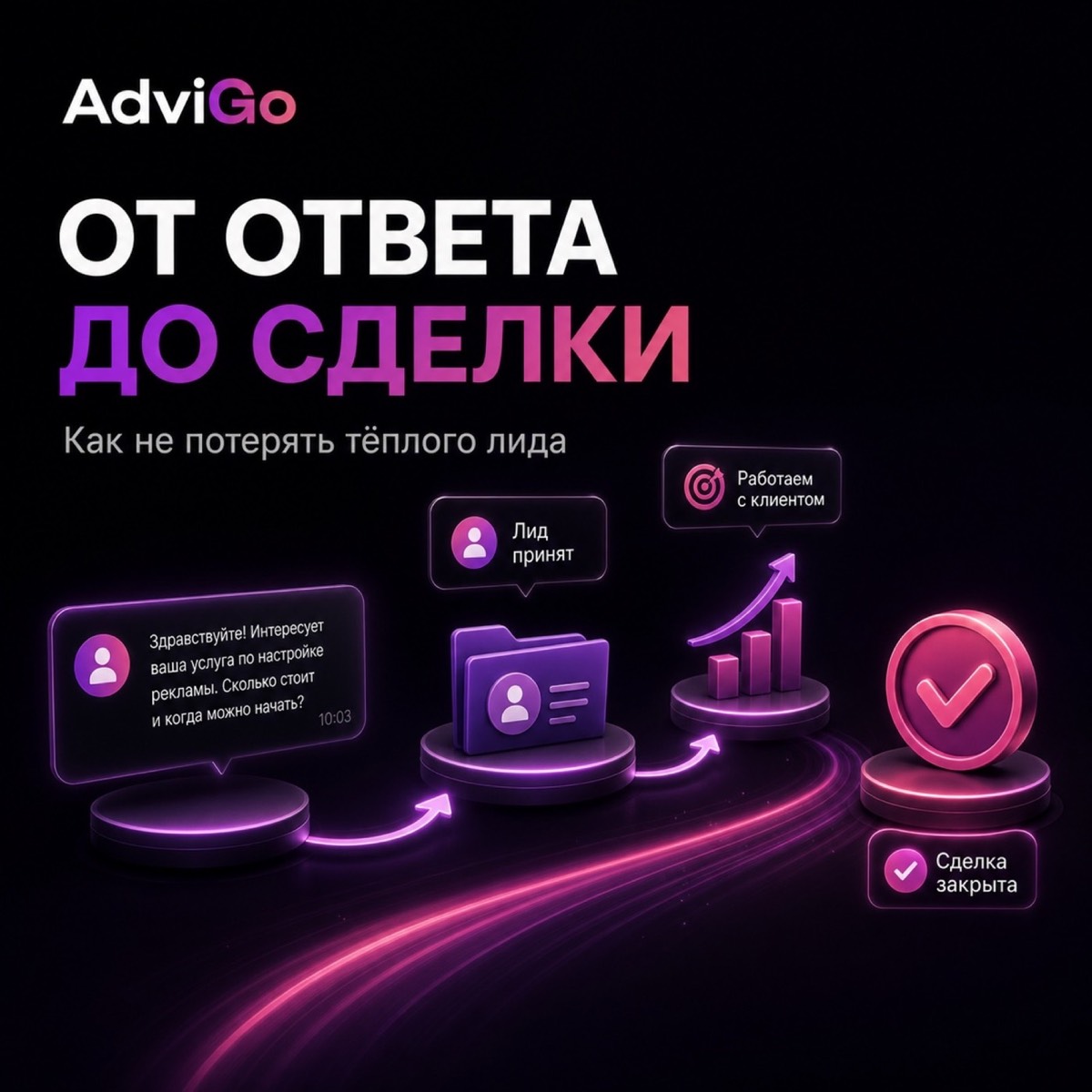
AdviGo connects these stages into one process: replies from Telegram accounts arrive in a shared interface, users move through statuses and statistics help assess the outcome.