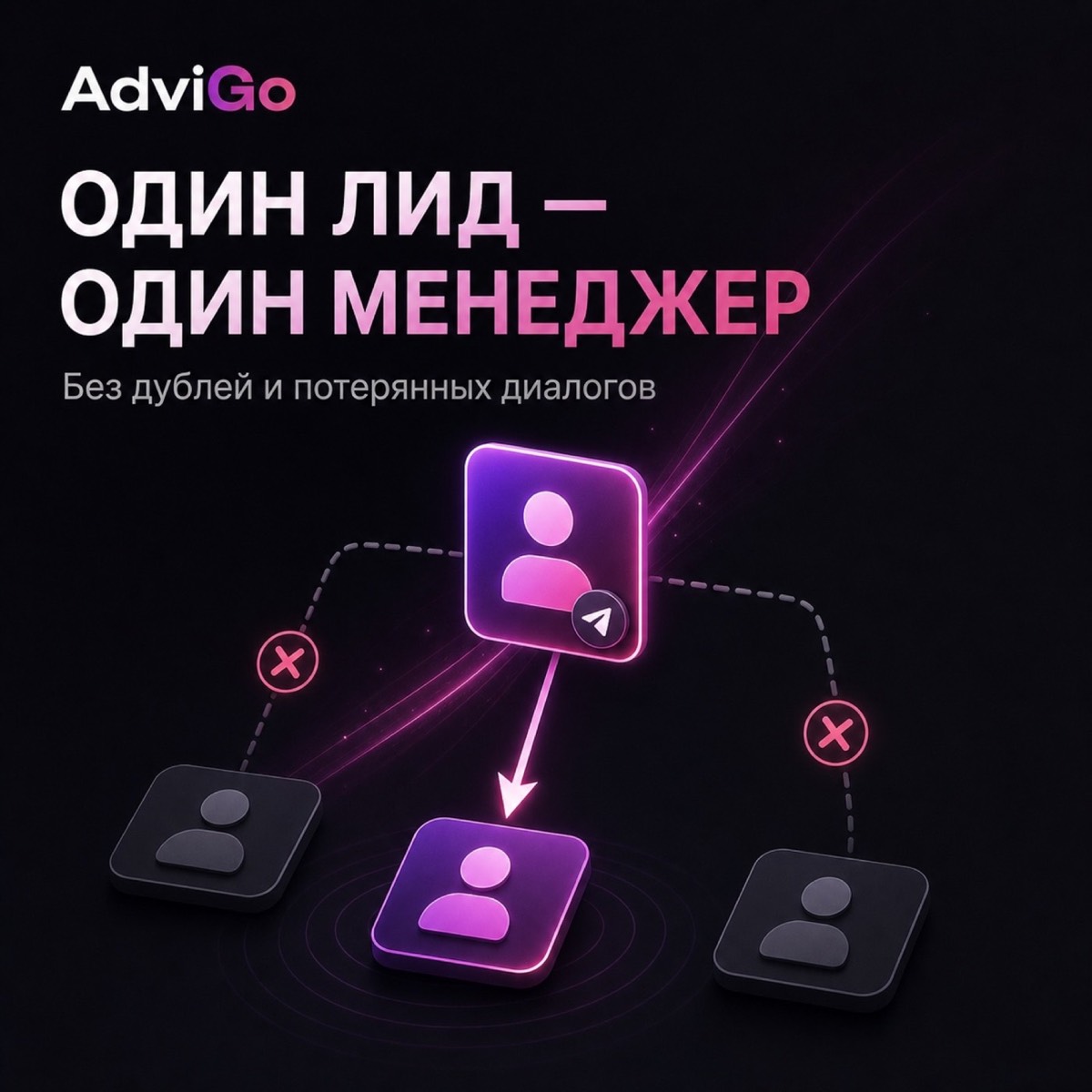
When multiple employees work with a shared stream of Telegram responses, two opposing errors occur without ownership rules. In one case, the client receives messages from two managers at once. In the other, each believes that a colleague has already taken the dialogue, and the answer remains without continuation. Both situations are solved not by care, but by routing.
Appoint the person responsible immediately.
First, determine at what point the dialogue goes to the manager. In one team, this happens immediately after the response is received, in the other - only after confirmation of the target interest.
What matters is not which rule is chosen, but that it is one. If some of the appeals are distributed through the system, and the rest of the employees are sorted out orally or in a work chat, transparency quickly disappears.
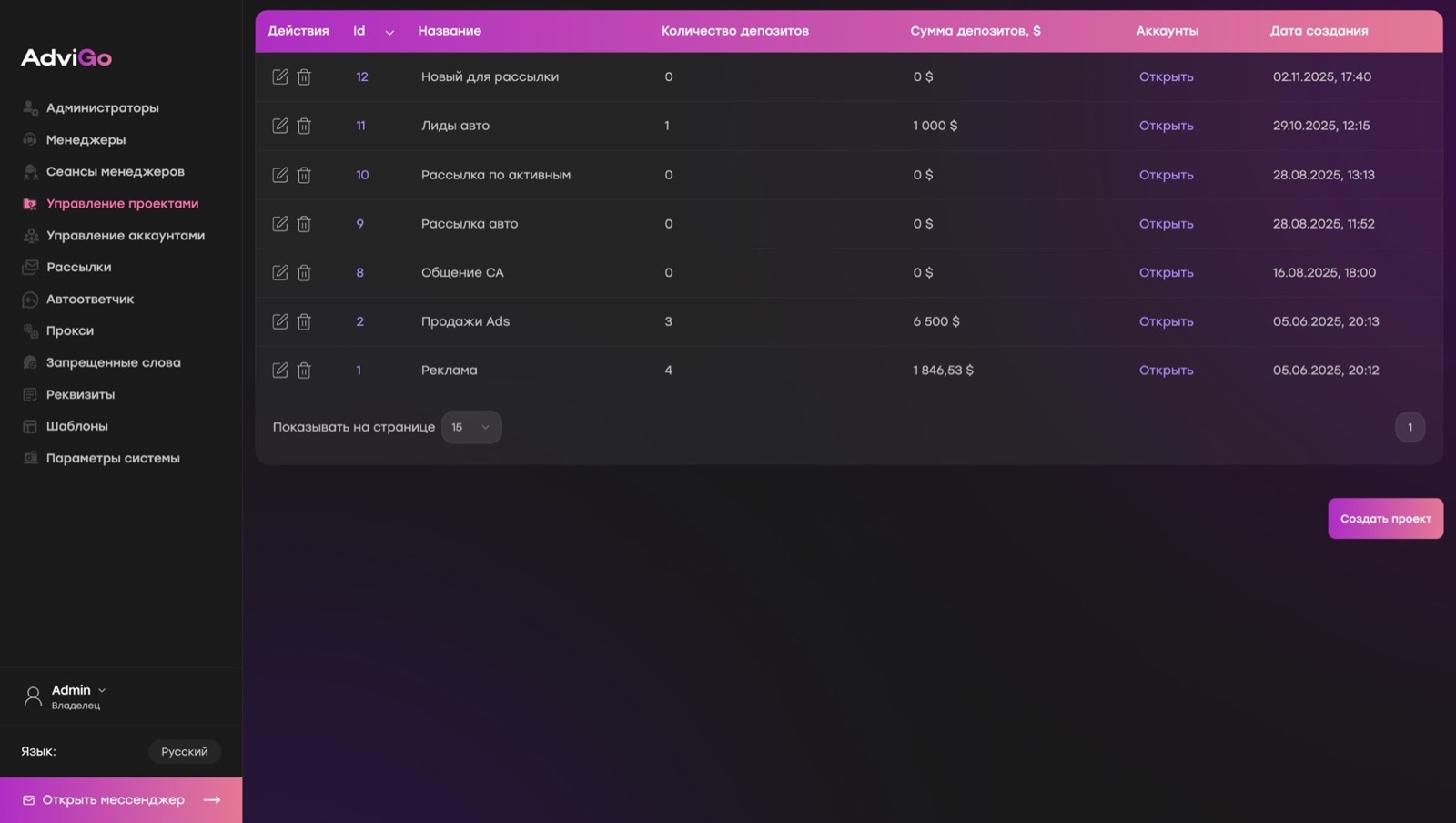
В Advigo аккаунты и сотрудники можно распределять по проектам. Несколько менеджеров работают с общим потоком диалогов внутри одного пространства, а руководитель сохраняет контроль над командой. You can read more about the structure of projects in the section of the project management manual.
Describe what it means to “take dialogue”
Reading a message is not enough. The employee could open a dialogue, get distracted and never return to it. Other managers will decide that the application is already being processed.
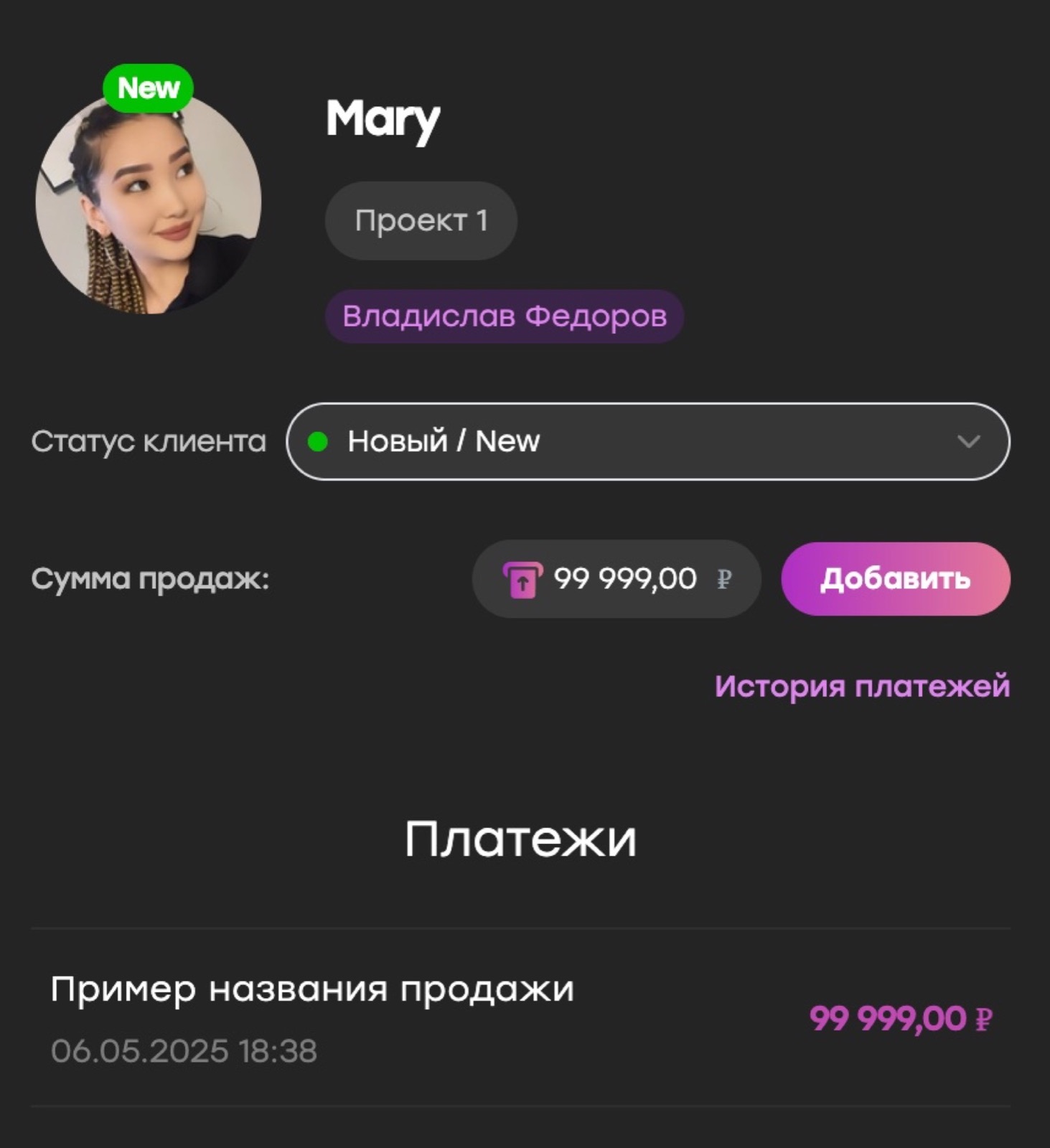
Therefore, the team must agree on what action confirms the acceptance of the lead. For example, a manager assigns himself/herself to responsibility and changes his/her status from “New Answer” to “In Work”.
After that, any employee sees that the dialogue is already busy. If the manager is waiting for information from the user, the status should also reflect the real situation: for example, “We are waiting for the customer”, and not remain in the “In the work” state for several days.
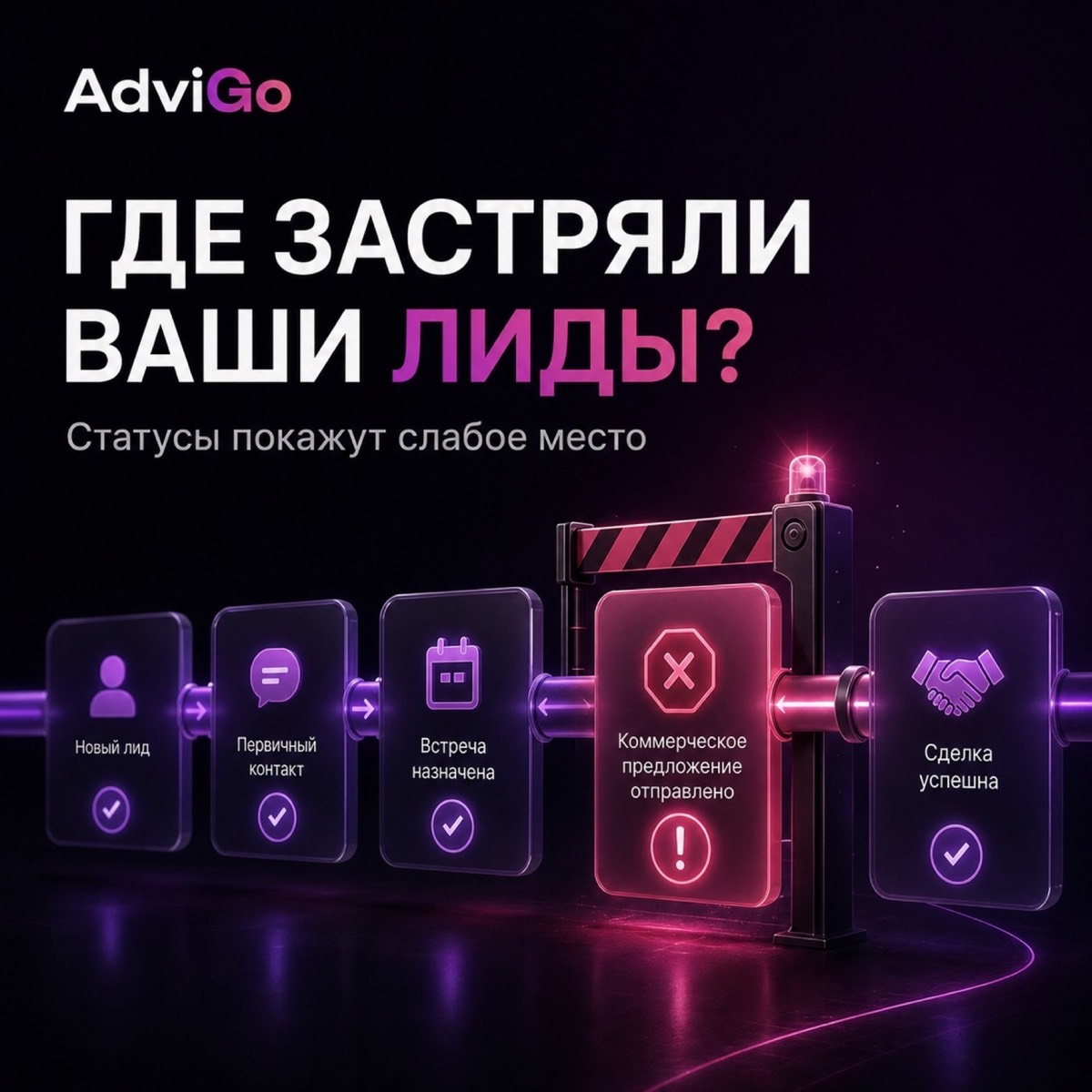
In AdviGo, user movement can be recorded using statuses. They help separate new appeals from active dialogues, qualified leads, deals and rejections. This logic is described in more detail in the section “Sales and user statuses”.
One responsible person does not mean working alone.
The one-lead-one-manager rule does not prohibit colleagues from engaging in dialogue. It determines who is responsible for the next step.
A manager may ask for help from a team leader, refer a technical question to a specialist, or involve another employee in a complex transaction. But for the client, the team’s work must remain consistent.
If multiple managers write to a user at the same time without coordination, the client receives repeated questions, different terms, or conflicting answers. When the owner of the dialogue is determined in advance, colleagues can help without creating chaos.
Separate the rights of employees
A common interface does not mean that all employees have the same access.
The administrator needs project and account settings. Timlid - the ability to control the queue and redistribute dialogue. The manager has enough work projects and appeals that relate to his tasks.
This separation reduces the risk of accidental changes and helps to maintain working accounts and customer base within the company. Managers work with dialogues in AdviGo, so they do not need to transfer the Telegram sessions themselves and data to log into accounts.
Watch for load distribution
Even clear rules will not help if one manager receives significantly more appeals than others.
An overloaded employee begins to respond more slowly, delays some dialogues, and returns to users less often. At the same time, colleagues can remain free because the queue is unevenly distributed.
It is important for the manager to look not only at the final conversion of employees, but also at the conditions of their work. The manager, who received 200 cold answers, is in a different situation than a colleague with 50 warm leads.
In the AdviGo “Statistics” section, you can analyze the results of work and find areas where the dialogue stops moving on. If one employee constantly accumulates appeals without the next step, part of the load should be redistributed.
Each dialogue should answer three questions.
To ensure that the new answer is not lost, the team must understand at any time who is in charge of the user, where the dialogue is and what should happen next.
If at least one question is not answered, the appeal risks hanging. For example, a manager is appointed, but the next contact is not recorded. Or the status is changed, but no one is responsible for further action.
AdviGo helps to gather work in one space: employees see common dialogues, appoint responsible people, save context in comments, guide users by status, and the manager evaluates the results through statistics.
Then the one-lead-one-manager rule ceases to be a verbal arrangement. It becomes part of the process in which the client does not receive duplicate messages, and interested appeals are not left without continuation.