An experienced manager knows the product, responds quickly to customers and is able to bring dialogue to the sale. Therefore, when he is wrong, the manager thinks that the problem is the inattention of the employee.
The manager forgot to go back to the client, didn't pass the information on to a colleague, sent a second message or missed a new response.
But even the best employees make mistakes when they conduct dozens of conversations every day, work through several Telegram accounts and constantly switch between tasks.
In such a situation, the quality of work depends not only on the experience of the manager, but also on how the process is organized.
A strong manager cannot remember everything.
While there are few appeals, the employee can keep the agreements in his head: who to send the calculation, who to clarify the details, who to write in the evening.
As the workload increases, such tasks become too many. At the same time, new messages come, old clients come back, colleagues ask questions, and the manager switches the manager to another project.
As a result, a staff member may:
- Forget to go back to the client;
- Do not notice the message;
- Lose context after communication;
- Start working with an appeal that is already being made by a colleague;
- Take the message read for processed.
This does not always mean low qualifications. Often, the system requires the manager to remember more than can be reliably held in his head.
Mistakes are rarely seen in reports
Standard statistics include bids, dialogues and sales. But there will not appear a line: “the manager forgot to send the calculation, so the deal did not take place.”
Clients rarely explain why they left. He doesn't say he got the same answers from two employees or is tired of re-telling about his task.
He just stops answering.
An executive sees a decline in conversions, but starts looking for the reason in advertising, price, or sales skills. Some customers may have been lost due to routine operational errors.
Why learning doesn’t solve everything
Once errors are detected, the manager usually conducts training, enters instructions and asks employees to be more careful.
This is necessary but does not eliminate the cause of the problem.
Even an experienced manager can’t constantly monitor dozens of conversations on different accounts. They may not know that a colleague has already started communicating with a client, forget about a verbal agreement, or lose a message among notifications.
The larger the team, the more sales depend on the memory of each employee.
That's not enough for a growing department. Managers need a work environment that helps prevent predictable errors.
Where the process begins to break down
Problems come gradually.
The company connects new Telegram accounts, hires managers and launches additional projects. Dialogues are distributed across different windows and devices, and information about the transfer of the client remains in private messages or verbal agreements.
As a result, typical situations arise:
The manager read the message, got distracted and forgot to answer.
The employee left at the weekend, but colleagues don’t know which customers are waiting for information.
Two managers simultaneously sent an offer to one person.
The manager considers the appeal processed, although the client never received a response.
If such mistakes are repeated in different employees, the problem is no longer in a particular person, but in the organization of work.
What is changing with AdviGo
AdviGo combines Telegram-dialogues of the company in one workspace.
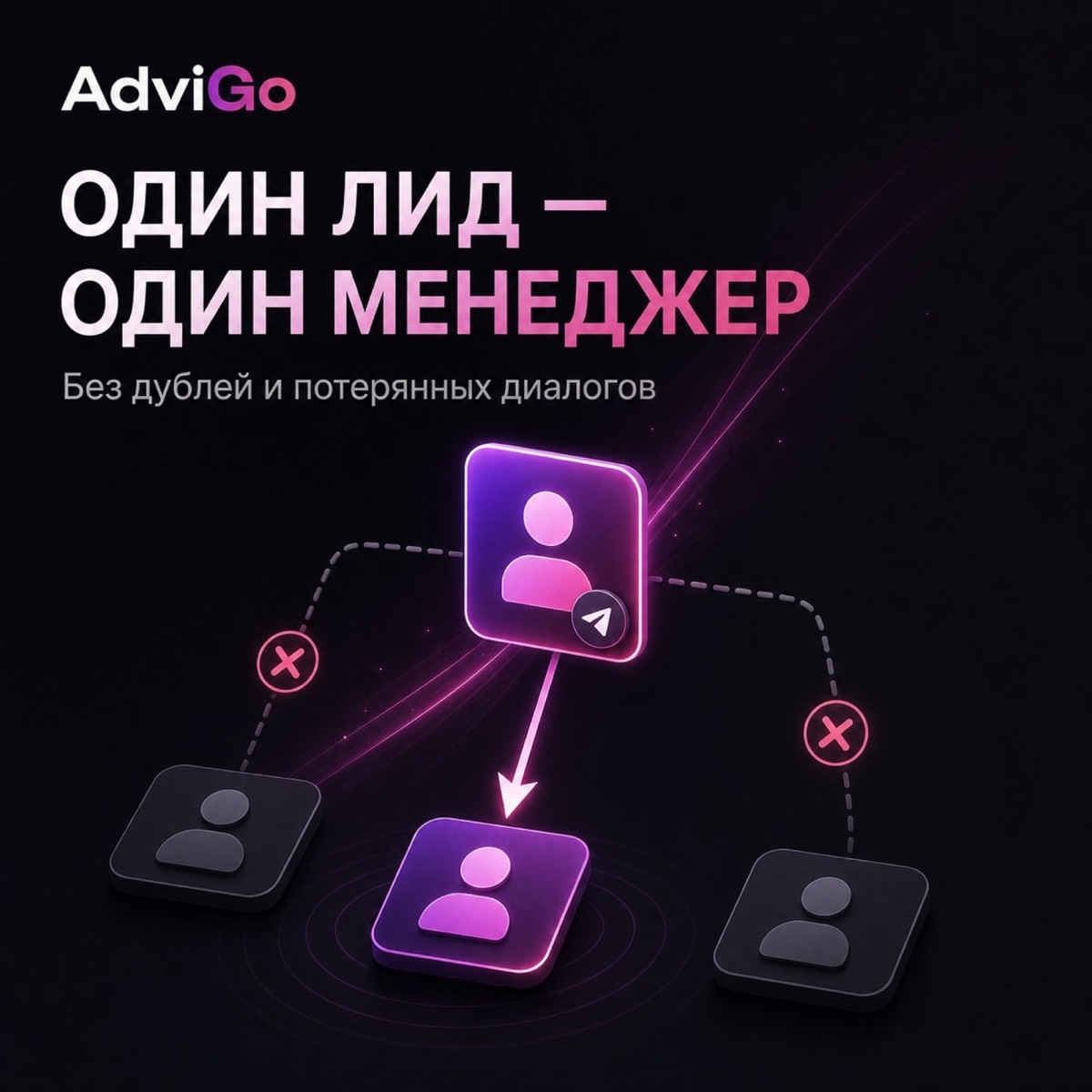
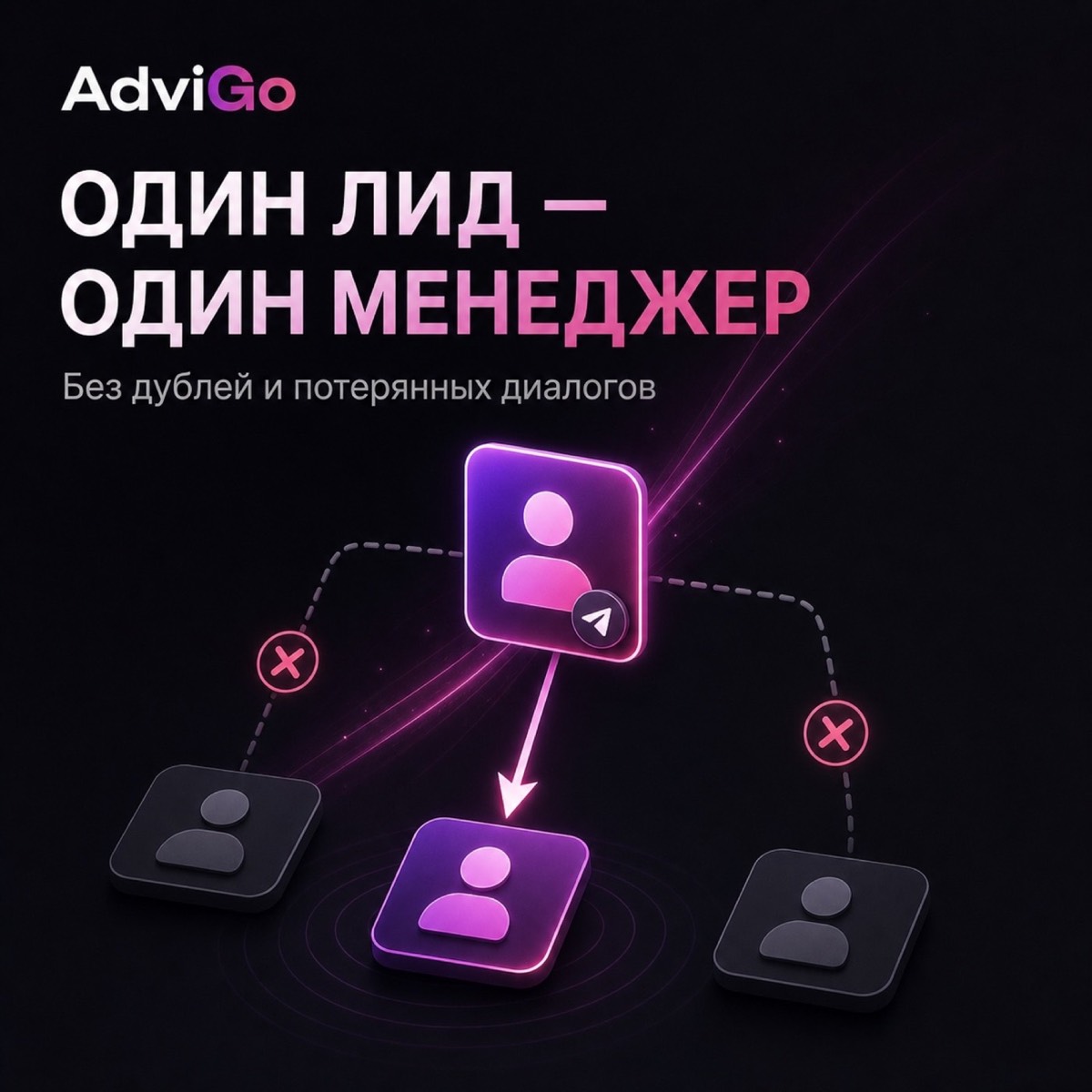
The team sees who is responsible for a particular client, so managers do not start parallel correspondence and do not leave the appeals ownerless.
The manager may check:
- What applications are in the work;
- For whom is each dialogue fixed;
- What messages require attention;
- how the workload is distributed among employees;
- where the client remains unanswered for a long time.
Correspondence can be filtered by projects and accounts, and the necessary information can be found through search.
AdviGo does not make managers infallible and does not replace learning. Its task is to remove the conditions in which errors occur due to disparate accounts, lost responsibility and the need to remember the entire process manually.
Fix the process, not just the people
When a manager makes a mistake, the easiest thing to do is ask him to be careful. But if similar situations occur regularly, it is worth checking the system itself.
Do you understand who is responsible for the client? Where is the transmission recorded? Can a manager quickly find unanswered messages?
The best managers forget, get distracted, and lose context. A well-organized process prevents a single human error from slipping into a lost sale.
If the team works through multiple Telegram accounts, AdviGo helps to gather communication in one place so that managers can focus on sales rather than trying to forget nothing.