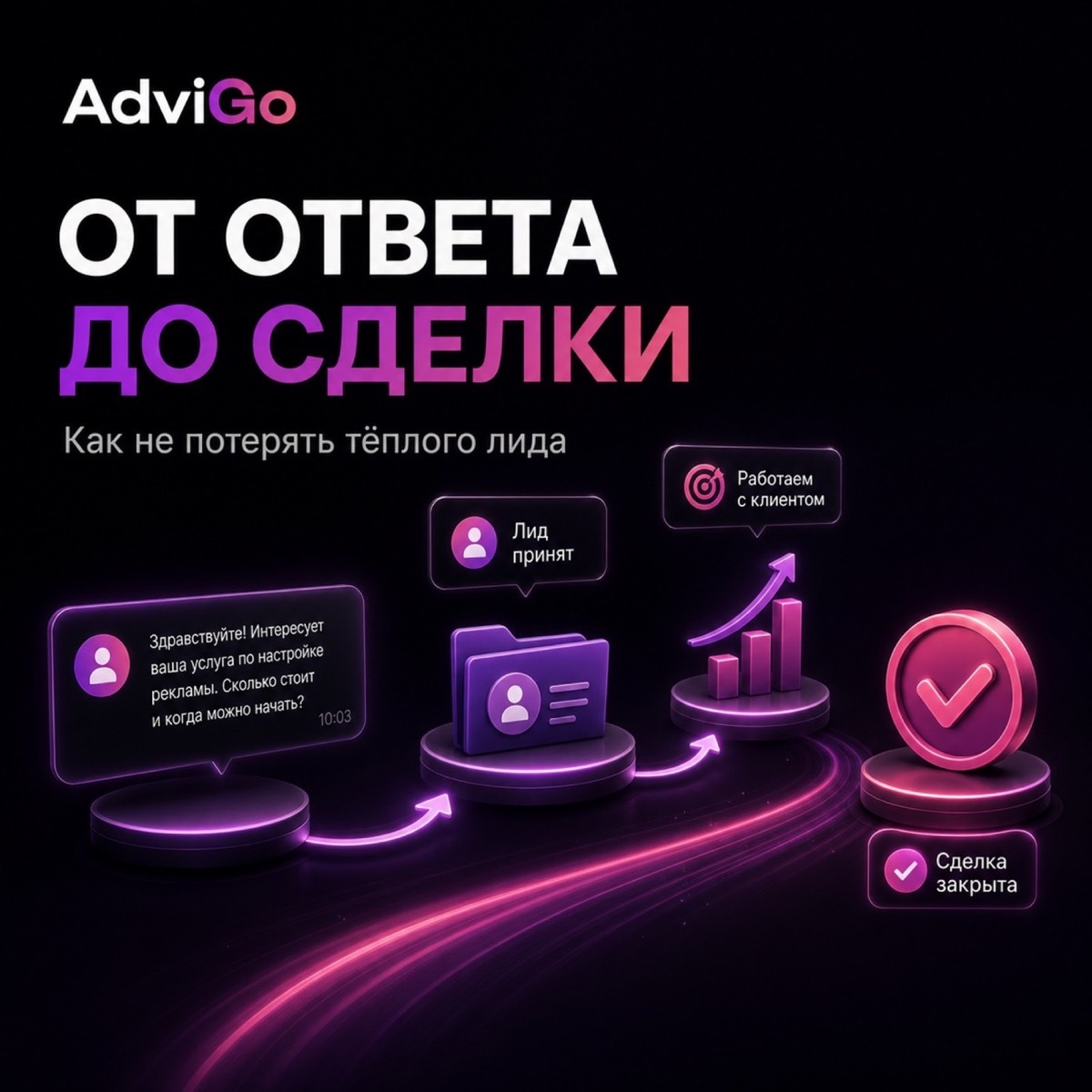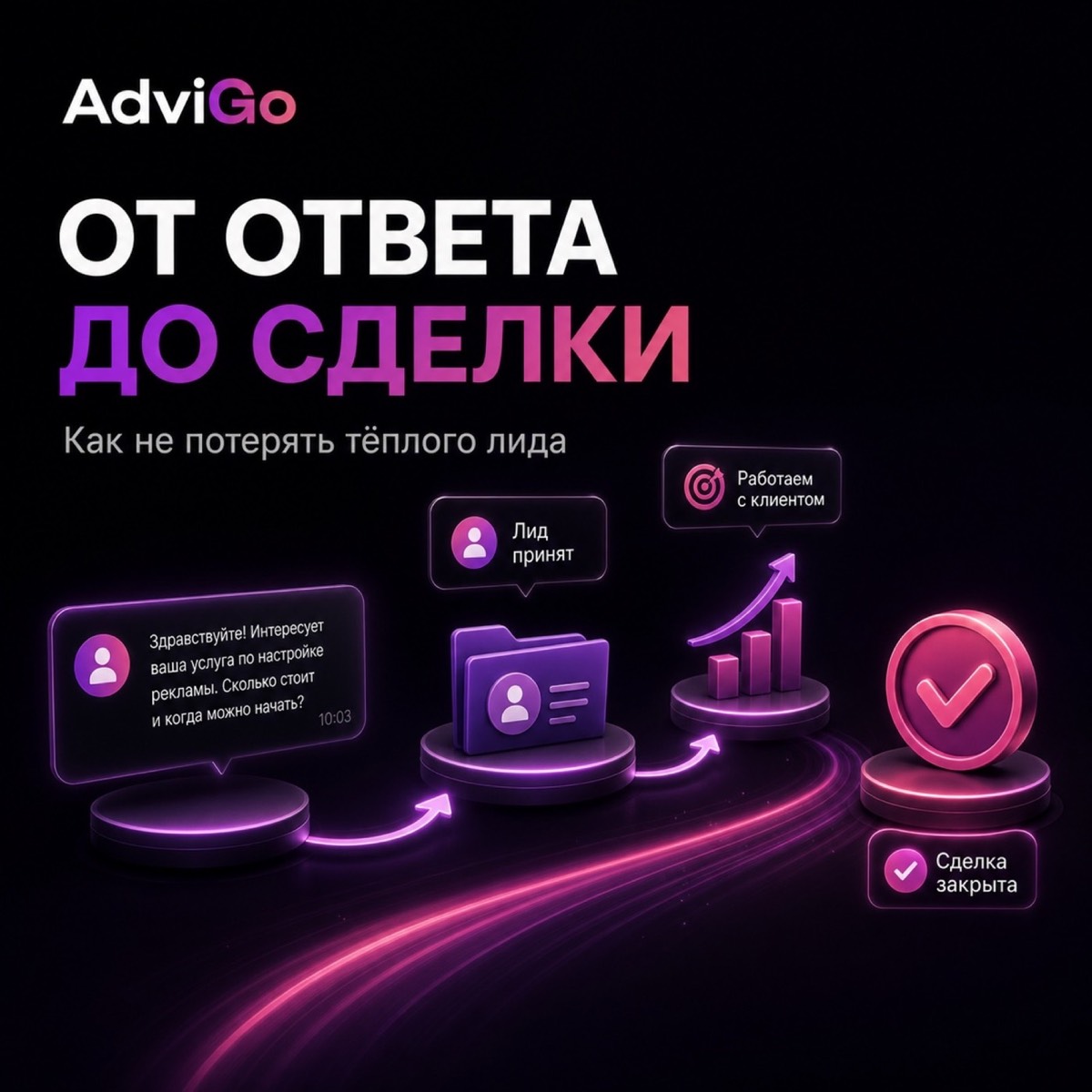
A response to a newsletter is not a lead, much less a sale. The user simply took the first step: interested in the offer, asked a question or decided to clarify the details. The outcome depends on how quickly the team notices the answer, understands its context, and suggests the next step.
It is at this stage that some potential customers are lost: the message was seen too late, the manager did not understand what was sent to the user, the dialogue was transferred to another employee without context, or after the phrase “write me in a week”, no one else wrote.
Divide the answers by meaning
Not every answer needs to be treated the same way. To begin with, a few clear categories are enough:
Explicit interest - the user wants to know the terms, cost or is ready to move on.
Clarifying question – the person does not have enough information.
Delayed interest - the offer is relevant, but later.
Refusal - the user directly informs that the offer does not suit him.
The manager immediately knows what to do next. Clear interest requires a quick connection to the dialogue, you can prepare answers to frequent questions in advance, and with delayed interest, it is important to fix the next contact.
In AdviGo, answers from connected Telegram accounts appear in one work interface. Therefore, the manager does not have to constantly switch between Telegram sessions and manually search for which account a new interested user appeared on.
Respond while the interest is still relevant
The user who has just responded to the newsletter is already in the context of the offer. After a few hours, they may forget a message, switch to another task, or turn to a competitor.
There is no universal norm like “response in two minutes”: speed depends on the product and the sales process. But within the team, it should be clear what time of first response is considered normal.
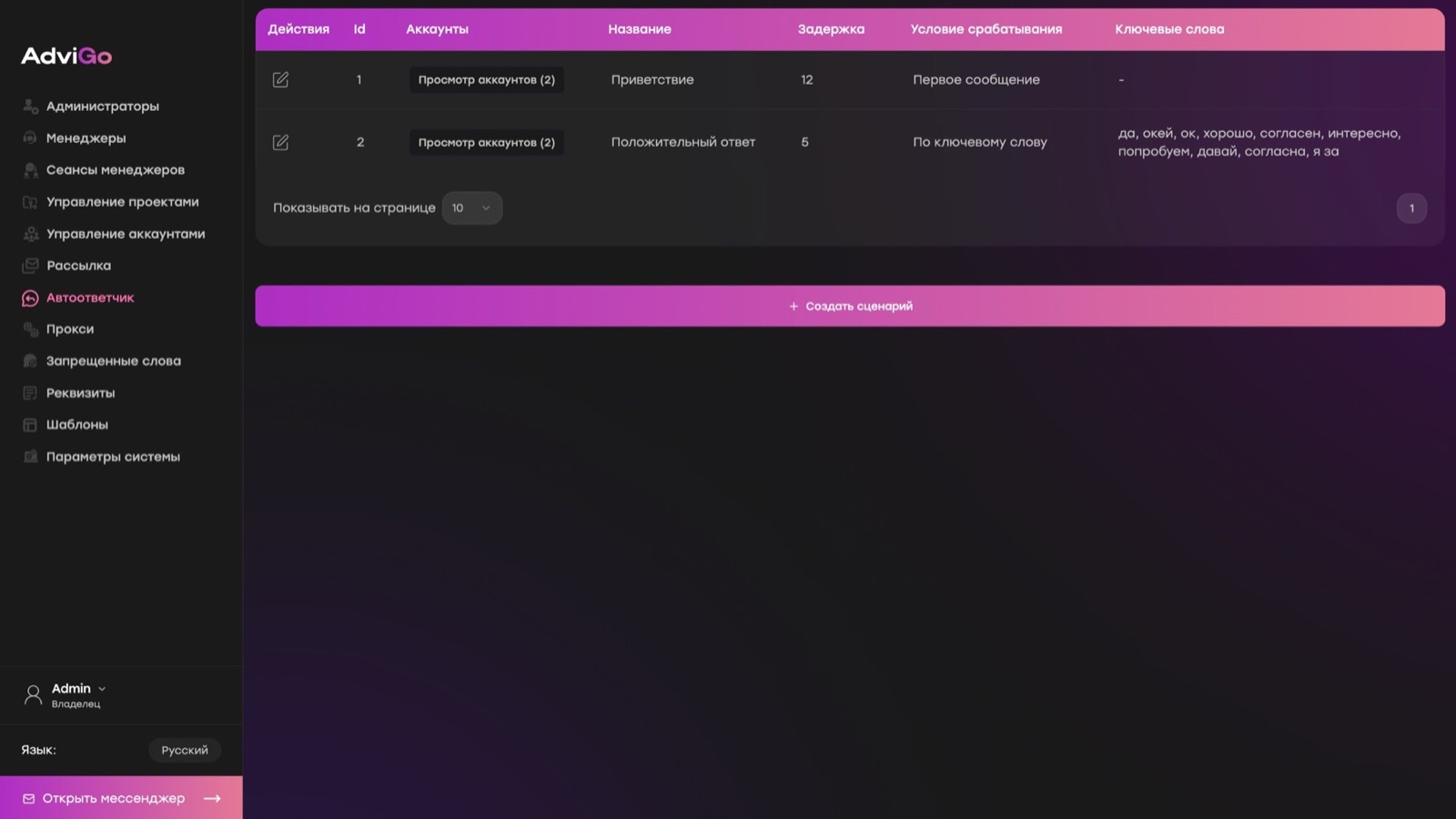
In AdviGo, you can use an answering machine for additional insurance. For example, automatically confirm the receipt of a message, send a greeting or respond to a given keyword phrase. This is especially useful if the manager is unable to connect to the conversation instantly.
In this case, the answer should not try to completely replace the seller. Its job is to keep in touch and help the user wait for the next step.
Detailed instructions on system capabilities are in the AdviGo manual.
Don't start the conversation again.
One of the unpleasant situations for the user looks like this:
The newsletter offers a specific service. The man replies, “I wonder how much?” After a while, the manager connects and writes: “Hello, how can we help?”
The context of the newsletter is lost, and the client has to explain again why he wrote at all.
The first live response should continue the previous conversation. For example, confirm a user’s question, answer briefly, and ask one clarifying question for the next step.
Do not turn the qualification into a questionnaire. If it is important to know the task, geography, timing and budget, these questions should be gradually built into the conversation, rather than sending the user a list of ten items.
Use statuses as the next step
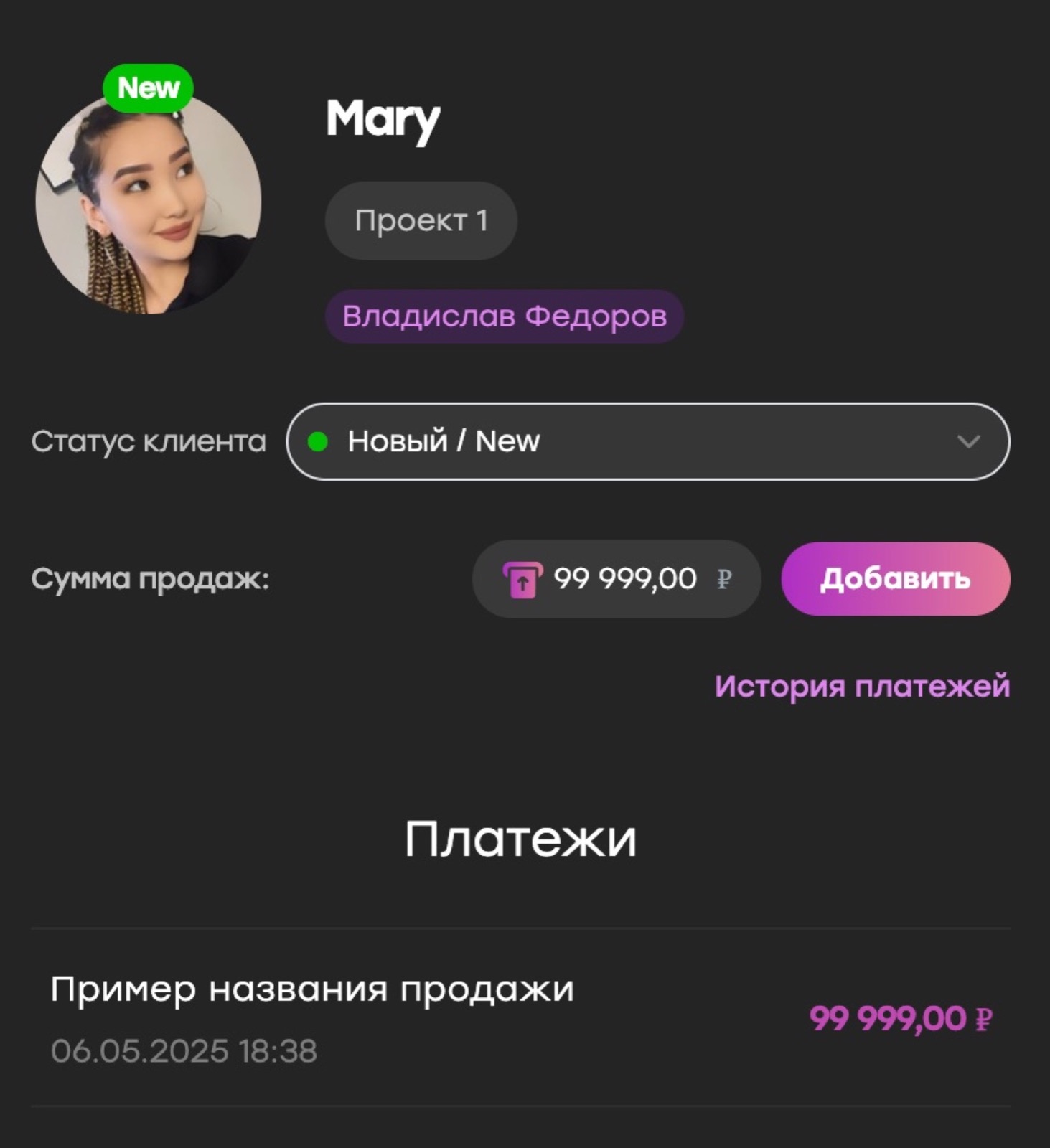
Status should help the manager understand what is happening to the client and what needs to be done next.
Wordings like “good lead” or “thinks” give little information. It is more practical to use the steps associated with the real process:
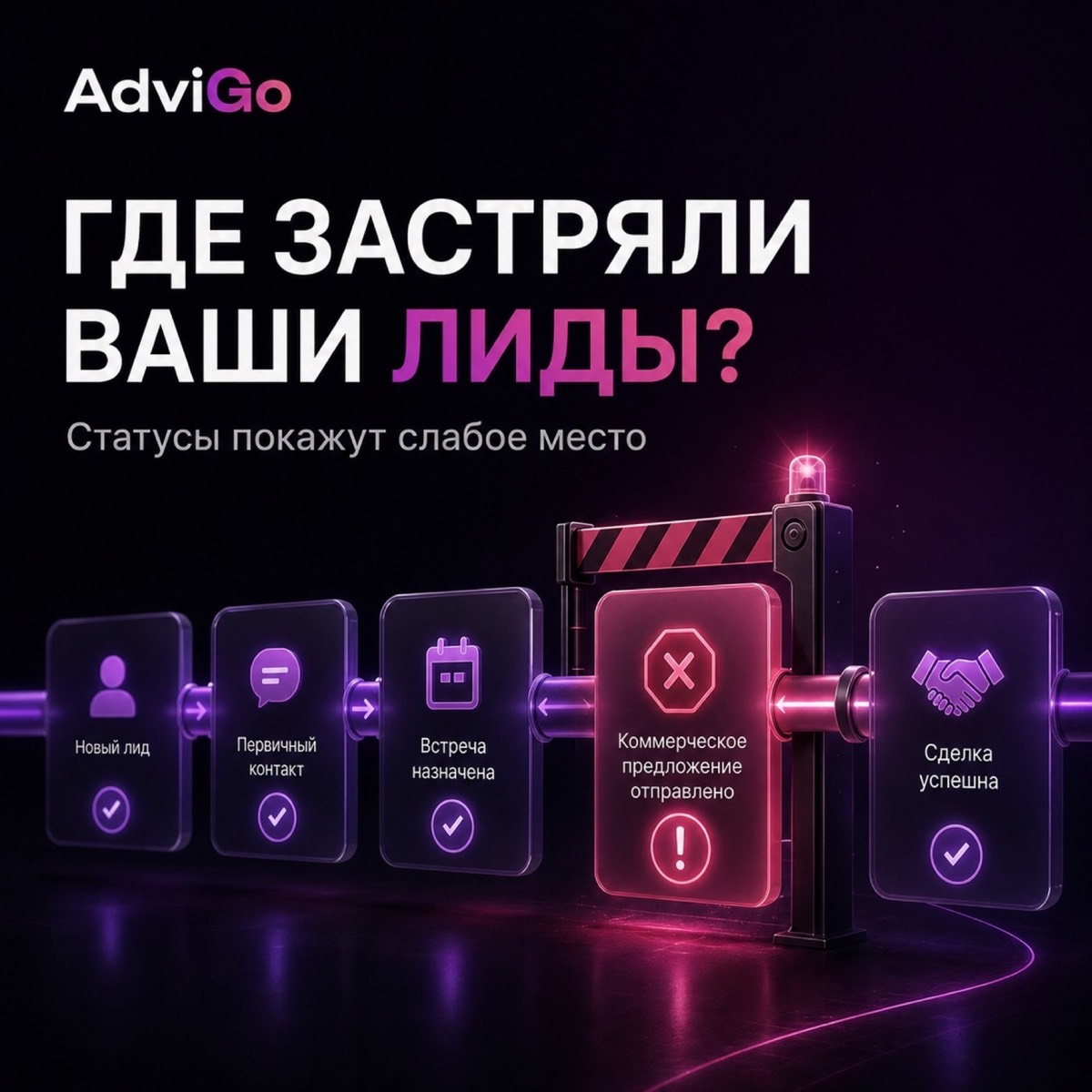
New answer → Target interest → Qualified → Next step → Deal / Refusal.
If a user says, “I’ll be back in a week,” it should also turn into a specific action, rather than staying somewhere inside the correspondence.
AdviGo uses user statuses for this. They help to fix the current stage of the client and build a clear funnel for the whole team.
Read more in the section of the manual “Sales and user statuses”.
Pass the lead along with the context
Managers change, leave for the weekend, pass some of the dialogue to colleagues. For the client, this should not mean starting a conversation from scratch.
If there is important information in the work - for example, the client is waiting for the calculation, asked to contact later, or has already discussed certain conditions - this context should be preserved.
In AdviGo, you can use internal dialogue comments to work within the team. It is convenient to leave information that colleagues need, but should not be sent to the user.
For example:
“Interested in the rate for 20 accounts. I asked you to write after 15:00.”
The next manager immediately understands the situation and can continue the conversation from the right place.
Control not messages, but movement in the funnel
If the manager looks only at the number of dialogs processed, you can get a beautiful report and lose a significant portion of sales.
It is more useful to look at the sequence:
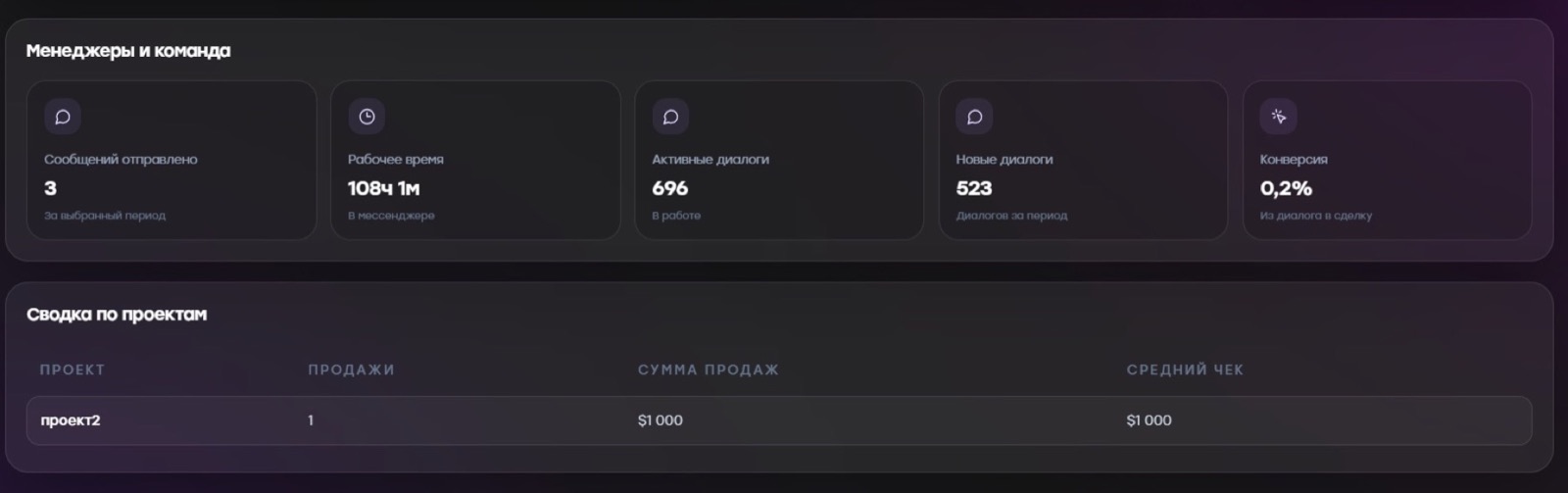
How many users answered → how many showed a targeted interest → how many qualified → how many moved to the next step → how many reached the deal.
To analyze the results, AdviGo provides a separate module “Statistics”.
For example, if the newsletter consistently leads interested users, but after the first communication most of them disappear, the problem may not be in the database or the text of the newsletter, but in further processing.
If managers are good at closing qualified leads, but there are too few such leads, it is worth returning to the audience and offer.
So statistics help to look for a problem at a particular stage, rather than explaining a weak result with the general wording “mailing does not work”.
Don't forget to touch again.
Some users do not buy immediately because the offer does not suit them. The reason may be simpler: there is no time, you need approval, the budget is over or the product will be needed in a few weeks.
If the manager simply closes the dialogue, the potential customer will be lost.
Therefore, agreements such as “write on Monday”, “we will return to this after paycheck” or “we will discuss next month” are better understood as a full-fledged stage of work.
Set up an agreement through status and internal comment so that the next contact doesn’t depend on the specific manager’s memory.
Each answer must take the next step.
A warm lead is rarely lost because of one big mistake. This is usually a sequence of small breaks: the response was not noticed, the manager connected late, the context was not transferred, the status was not changed, the re-touch was forgotten.
Therefore, after each interested response, the team must understand three things:
Who is responsible for the dialogue → what stage the user is at → what should happen next?
AdviGo helps to collect this process in one workspace: responses from Telegram accounts fall into a common interface, managers work with dialogues, save context in internal comments and record the movement of the client through statuses, and the manager can evaluate the result through the Statistics section.
Then the mailing does not end at the moment when the user replied. It becomes a manageable path from the first message to the deal.