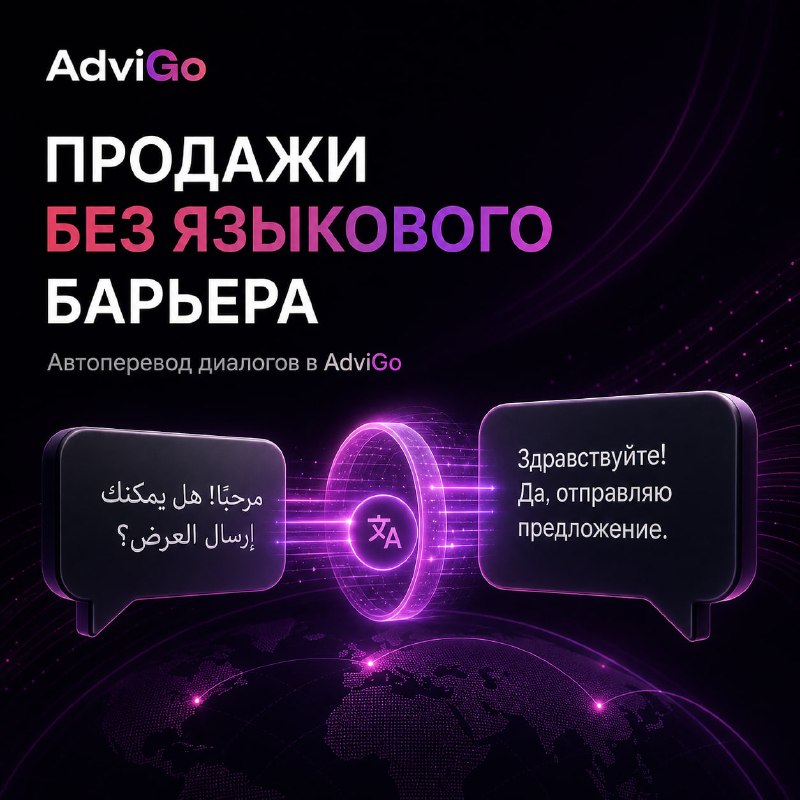
Entering a new geographic market often starts with translating the first message. The real challenge begins after the reply: the representative must quickly understand the question, preserve the meaning of the exchange and continue appropriately in another language.
Copying every conversation into a translator and back slows handling and increases the chance of errors. AdviGo automatic translation removes this repetitive work and lets the team handle international conversations in its shared workspace.
First adapt the offer to the market
Simply translating a message is not enough. A new country may have different currencies, payment methods, communication habits and reasons that influence buying decisions.
Prepare a distinct offer, opening message and next step for each market in advance.
AdviGo lets you separate these activities into projects. International audiences, accounts and conversations stay distinct, and you can analyze each market's results separately.
Use automatic translation for live conversations
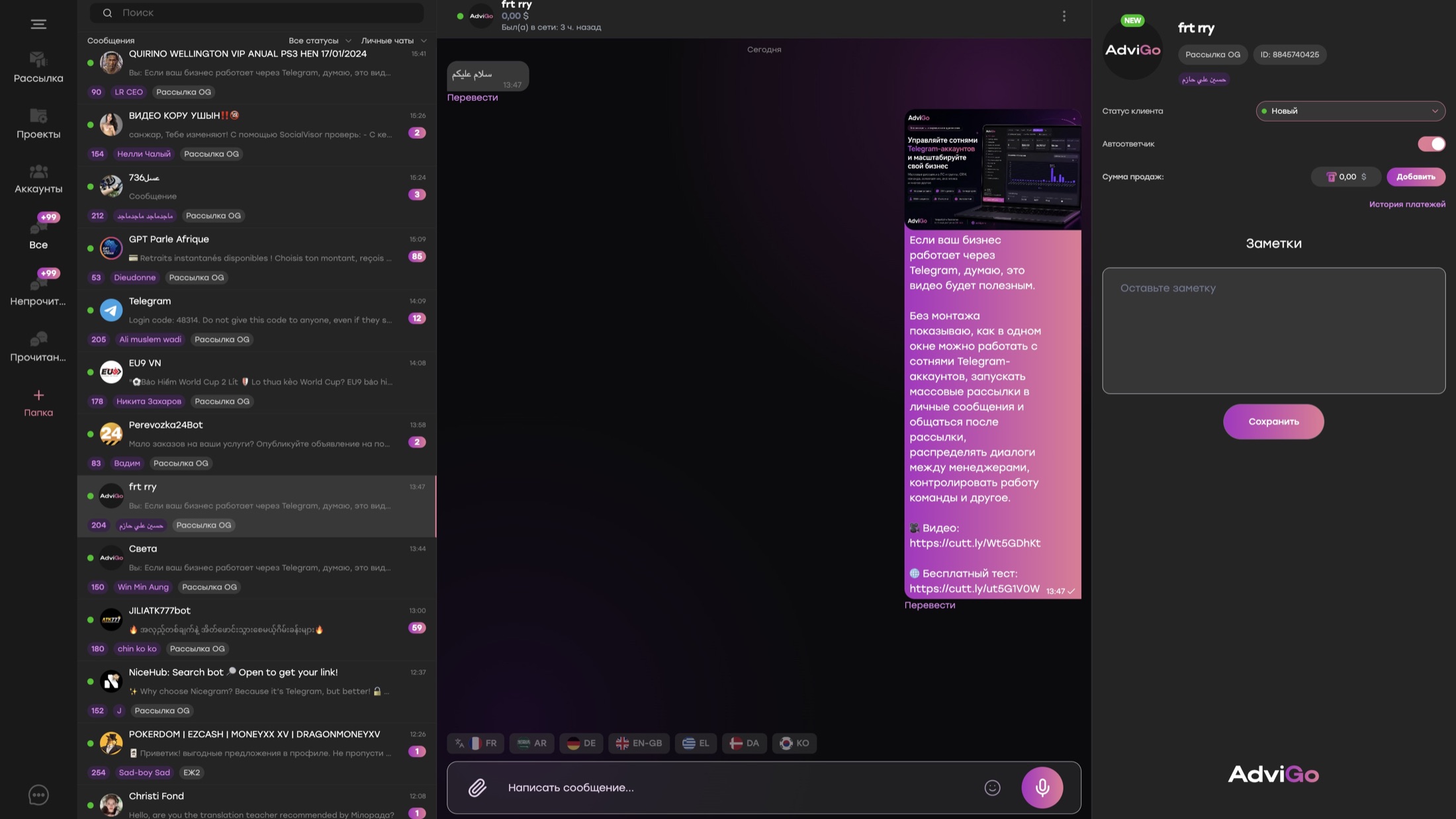
AdviGo automatic translation helps representatives understand foreign-language messages while chatting. They do not need to keep copying text into another translator, so they can engage in the conversation sooner.
Before a full launch, check translations of common phrases in your niche. Pay particular attention to specialist terms, plan names, abbreviations, amounts and deadlines.
Brand and product names may not need translation at all. Decide in advance which words the team should always spell consistently.
Prepare key messages in advance
Automatic translation is useful for live communication, but key messages should not be invented from scratch for every user.
Prepare greetings, clarifying questions, product explanations and proposed next steps in the language of each market. Check these texts before launch to make sure they sound natural.
Simple recurring responses can be automated, such as acknowledging a message or answering a straightforward question. However, the more an answer depends on the customer's situation, the sooner a representative should join.
Automatic translation and prepared scenarios then save time without turning the conversation into a long, impersonal sequence.
Keep different markets' results separate
Even the same product can achieve very different conversion rates in different countries.
Users in one region may reply quickly but rarely take the next step. Another market may produce fewer replies but more qualified leads. Combining results into one figure makes each market's performance hard to understand.
Study the conversations as well as the numbers. If international users repeatedly ask the same questions about payment, delivery or terms, translation may not be the problem. The offer itself may be insufficiently adapted to the market.
Translation removes a barrier but does not replace localization
Automatic translation lets representatives work with international users without constantly switching between Telegram and external tools. This matters especially when the team serves several markets and conversation volume is growing.
Reliable results come when translation is part of a sound sales process: each market has its own project, key messages are prepared, difficult questions are reviewed, and lead progress is recorded through statuses and analyzed in statistics.
The language barrier then stops limiting the team, and representatives can handle international conversations in the same system as their main stream of enquiries.